
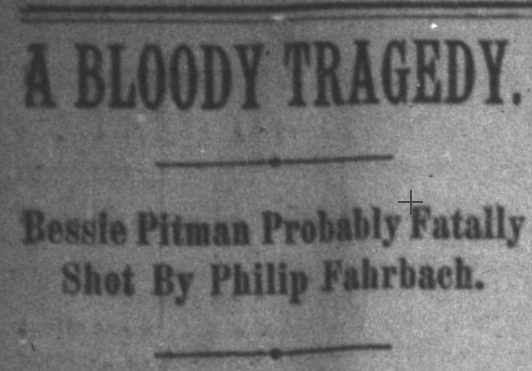
In the early morning hours of February 4, 1893, West Market Street in Indianapolis was quiet. Tucked between Circle Park (Monument Circle) and the Indiana Statehouse, the normally busy avenue had yet to come to life. The horse-drawn carriages, businessmen, and politicians who usually crowd onto the street during the day were nowhere to be seen at this hour. Still covered in darkness from the previous night and dusted with snow from a recent storm, activity on the street was minimal on this bitterly cold Saturday morning. Except for the light whistle of the wind, West Market Street was quiet this morning. That is, until the faint sound of three muffled but sharp cracks struggled to escape the walls of the house at 172 West Market St.
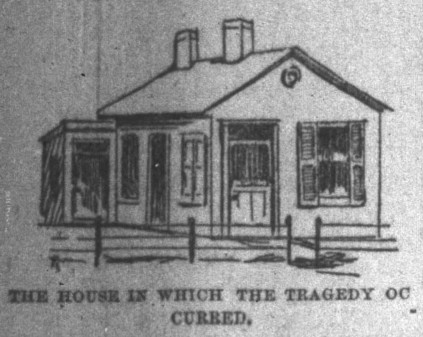
The one-story wooden house at 172 West Market St. spent most of the previous twenty years leading up to this morning as a boarding house. And from what casual passers-by in 1893 could see, it still served that same purpose. But city officials and local police officers knew this building as something else. The Italian immigrants used the word “bagnio” to describe the building, and with good reason. The little house on West Market Street, which mostly rented out rooms to attractive young women, was now a brothel. And on this cold winter morning, inside one of the rooms, two people are lying on the floor, covered in blood, and fighting for their lives.
The brothel stood on the city block straddling West Market Street to the north and West Court Street to the south. And if you turned down the alley on Court Street, opened the small wooden gate, walked up the path, and opened the side door, you’d find yourself in the room of 25-year-old Elizabeth “Bessie” Pittman, aka “Bessie Bell.” Bessie had been living at the brothel for just under a year.
Owned by Bertha Brunner, it is unclear how many women lived in the house at this time and how many were plying their trade from the confines of their bedrooms. What we do know is that the house was a popular site for visiting men. While several brothel control laws had been enacted in Indiana in 1891, there remained an uneasy truce between the Indianapolis police and area brothels, with enforcement of the brothel control laws being inconsistent, at best.
Much to the dismay of the residents of 172 West Market Street, their brothel was about to become the unwelcome scene of much attention from Indianapolis police because inside the room of Bessie Bell, lying on the blood-stained floor next to her bed, was her boyfriend of two years, Phil Fahrbach.
Fahrbach, 24 years old, was a bartender at the nearby English Hotel. Known for his temper and sometimes violent outbursts towards Bessie, Fahrbach was well known to the other inmates of the Brunner brothel. The residents told stories of the two young lovers and how their fights would spill onto the street after long nights of drinking.
Dora Bartlett, a resident at the brothel, told police of several incidents where Bessie and Phil assaulted each other. Once, after a heated argument inside Hoss’s Saloon on West Washington St., Phil began to choke Bessie. She escaped by biting the tip of one of his fingers off. Another incident: when she discovered that a fellow brothel resident, Millie Dehart, had an intimate relationship with Phil, Bessie shot her. And yet another, in October of 1892, Bessie grabbed her gun and shot at Phil as he was lying asleep in her bed. The bullet passed over Fahrbach’s head and lodged itself into the wall. According to Bartlett, this was followed a few months later by an incident where Phil and Bessie came into Bartlett’s room for a visit, and Bessie quietly slipped a revolver under Bartlett’s pillow. Bessie confided to Bartlett that Phil tried to kill her. Fahrbach countered with an accusation that Bessie tried to kill him. Despite this turbulent relationship, the couple was engaged to be married in just a few short weeks.

But on the infamous February morning in 1893, as Phil Fahrbach now lay on the floor of Bessie Bell’s room, powder burns on his face and a bullet having passed through his left eye and stopping somewhere on the opposite side of his skull, there seemed to be much more to this story than a lovers quarrel turned bad. Because alongside Phil, also lying in a pool of blood, with a bullet hole in her head, but somehow still clinging to life, was Bessie Bell.
Exactly what happened that morning inside Bessie’s room was not immediately clear to investigators, partially because other residents in the house were reluctant to provide testimony. Marion County Coroner William Beck had the other women in the house subpoenaed by a court to obtain their accounts of the incident. And even then, when interviewed by Coroner Beck and Indianapolis police detectives David Richards and Jeremiah Kinney, the other women of the house gave reluctant, timid, and sometimes inconsistent testimony. According to the women, Bessie was last seen at 2:00 in the morning heading to bed alone. Some of the residents say Bessie may have been intoxicated at that time.
While testimony from the nervous brothel residents was cloudy, at best, one key witness was able to provide a first-hand account of what happened that morning on West Market Street. Despite losing a massive amount of blood and sight in her right eye, Bessie Bell herself was well enough (after being stabilized by a doctor) to tell the detectives what, in her words, unfolded in her room that morning.
Bessie said Phil arrived at her door between 5 a.m. and 6 a.m. Having finished his shift at the English Hotel bar many hours before, Bessie asked Phil where he had been all night. He replied, “None of your business, but I know what you have been doing.” Bessie said Phil was drunk, which is backed up by others who say they saw him the previous night on Tennessee Street drinking with another woman.
After she denied keeping company with other men, Bessie said Phil walked across the room, grabbed her gun off the dresser (a 32 caliber revolver), and fired three shots. According to her testimony, the first bullet went into the wall, the second into her face, striking her right cheek just below her temple, and for the third, Phil Fahrbach turned the gun toward his head. Bessie pleaded, “Oh, for God’s sake, Phil, dear, don’t do that!” And as she walked over to him, he pulled the trigger one last time, taking his life. Still in her night robe, now covered in her own blood, Bessie screamed.
Hearing the noise, Dora Barlett and fellow brothel resident Flora Boyles charged into Bessie’s room. Bessie told the women, “Phil has killed me and himself, too!” But fearing more for her lover than herself, Bessie begged, “Do something for Phill. Let me alone.” Bartlett made her way over to Phil, who was lying on the floor, the blood in his head emptying itself onto the carpet. For a moment, Bartlett said Phil’s lips were moving, but no sound came from them. Seconds later, he died.
Almost immediately, some women in the house ran out into the street to fetch Bessie’s mom, Martha Kinsey (Mattie Bell), who lived less than a block away at 191 West Market St. Mattie Bell was also in the brothel business. Her house had been raided the previous summer by police. A few months later, on December 20, 1892, Annie Taggart, a 20-year-old runaway who had taken up residence at Mattie’s brothel a year earlier, took her own life by pointing a gun at her chest and shooting herself in the heart.
While some of the women went to retrieve Mattie Bell, a fellow brothel inmate ran into the room to comfort Bessie. It was her sister, Jennie Pittman (aka Jennie Jones). Jennie had attempted suicide the previous May while staying at the brothel by taking a near-lethal dose of morphine. On this morning, upon seeing Bessie in such a state of distress, she cried and demanded someone send for a doctor.
At the same time, an overnight guest at the brothel, James Lenahan, also ran out of the house, anxiously looking to make a quick getaway from the scene. Lenhan was a blacksmith for the local Acme Mills factory on West Washington St. James arrived at the brothel at 11 p.m. the night before with his friend Thomas Conners. After a few minutes, Conners left the brothel.
James said he heard the gunshots that morning, but he initially thought it was the sound of the cook in the kitchen preparing firewood for breakfast. A few seconds later, he says, Bessie came stumbling into the bedroom he was occupying with a resident, blood streaming down her head, and she thrust herself onto the bed. She cried, “For God’s sake, can’t you do something for me?!” Startled, he quickly dressed himself and ran out into the street.
Curiously, perhaps embarrassed about being caught in such a precarious predicament, Lenahan ignored requests from Coroner Beck for three days to testify about what he saw that morning. When he was finally found, Lenahan pleaded with the coroner that he be allowed to use the pseudonym “James Renihan” instead of his real name. When the coroner denied this request, Lenahan relented and told his story. He testified that when he left the house via a side door, he ran to the Cone’s Overall Factory on North Mississippi St. (now Senate Ave) to call the police.
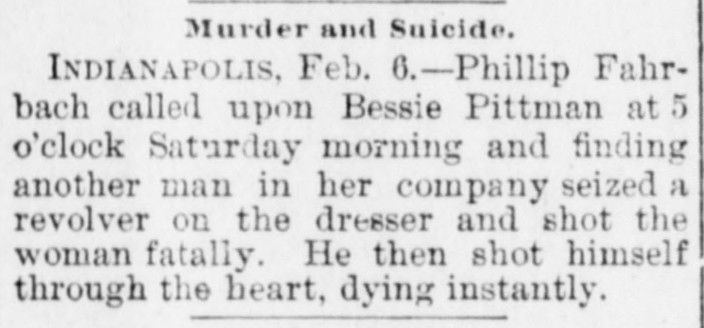
The police, Coroner Beck, and local doctor Samuel Earp all arrived at the same time. The inside of the house had begun to fill with spectators from outside who heard of the commotion. As Dr. Earp set about stabilizing and bandaging up the wounds of Bessie Bell, Coroner Beck started to examine the crime scene and the body of Fahrbach. After some time, he came to a startling conclusion: Phil Fahrbach may not have died by suicide.
While Coroner Beck was still conducting his initial investigation and preparing to move the body of Fahrbach, Bessie’s mother, Matie Bell, arrived on the scene. Upon seeing her daughter, she cried, “My poor, dear girl.” As Bessie lay in bed, Mattie kissed her daughter softly on the small portion of her head that wasn’t covered with bandages. Bessie responded, “Don’t cry, mother, don’t cry. God knows I couldn’t help it.” Bessie then cried out for Phil and said, “Oh my God! Is he dead, mother? Don’t tell me he is dead!”
In later testimony, Mattie Bell told investigators, “I was always afraid of Phil Fahrbach. He often threatened to shoot Bessie. He was very jealous and was always quarreling with her. He nearly shot her about three months ago. I told Bessie then that she had better quit him, but she said that she loved him and did not care what happened.”
At his office later that morning, Coroner Beck began to inspect the body of Fahrbach. The more he looked, the less this looked like a murder-suicide between two lovers. When he inspected Fahrbach’s left eye, the one through which the supposed self-inflicted bullet had passed, the coroner noticed no damage to the eyelid. Coroner Beck theorized that if someone were to shoot themselves in the eye, their natural reflexes would close that eye when pulling the trigger. But Fahrbach’s eyelid was undamaged, leading Coroner Beck to believe Phil’s eye was open at the time of impact.
In addition to a lack of powder burn on Fahrbach’s face or hands, Coroner Beck found that the bullet he pulled from Fahrbach’s skull was a different caliber than one that should have come from Bessie Pittman’s revolver. While an unused cartridge from her gun was taken and weighed 32 grams, the bullet inside Fahrbach weighed six to eight grams more. These circumstances, the undamaged eyelid, the lack of a significant powder burn, and a heavier bullet, led Coroner Beck to make an initial determination that the death of Phil Fahrbach was a homicide.
When Coroner Beck questioned brothel owner Bertha Brunner on these circumstances, she mentioned that it was possible there may have been another man in the room with Bessie and Phil early that morning.
His name was Thomas Fosner. A man she believed was a riverboat captain from Cincinnati, Ohio (he actually drained swamp land for farmers around Lebanon, Indiana) who was a former love interest of Bessie Bell. Brunner said the last time Tom visited Bessie, he offered to pay her money for her time, but she wanted nothing to do with him. Bessie’s mother, Mattie, said Phil often abused Bessie out of jealousy of her past relationship with Fosner. “Tom Fosner offered to deed her a house and lot if she would only throw over Phil for him, but she would have nothing to do with him.”
And while Bertha Brunner said she had not seen Fosner with Bessie in some time, others in the neighborhood revealed that he had been around the area recently, and some said they had seen him in the company of Bessie. A saloon keeper on Washington St., only a block away from the Brunner brothel, said Fosner was in the city just the day before at his saloon and saw him again near the Brunner brothel.
When investigators asked Bessie about Fosner, she revealed that the very pistol that was used that morning was given to her by Fosner. In return, she had given Fosner a pistol that was gifted to her by Fahrbach. But she denied any ongoing relationship with him and denied he was in the room that morning. Coroner Beck wrote to the city of Lebanon asking if anyone there knew the whereabouts of Fosner, but a reply came back that he had not been seen in the area since the previous Fall.
One of the first things police investigators noticed when examining the crime scene was a trail of blood in the snow that went from Bessie’s side door, through the alley, and onto Court St., where it stopped after about 75 yards. After finding no other information on the blood trail (and 90 years before DNA blood testing was done in criminal investigations), police concluded that the blood more than likely came from the clothing of James Lenahan as he ran away from the scene to call for help.
To add to the confusion, a neighbor who lived across the street from the brothel told investigators that he heard four shots that morning. When inspecting the room again later that day, Captain Quigley and Sergeant Miller J. Laporte found two mysterious bullet holes. One was in the wall and another in the ceiling. Since neither Fahrbach nor Bessie had exit wounds from their gunshots, these additional bullet holes only raised more questions. While unsure about the hole in the wall, investigators concluded that the bullet hole in the ceiling had been made recently.
After being looked over by the coroner, Fahrbach’s body was moved to the Flanner and Buchanan morgue on North Illinois St. When his clothing was examined, an identification card was found, placing his home address as 605 North Mississippi St. In addition, the undertakers also found a letter. It read:
“Jay’s Saloon January 17:
Dear Bessie: No doubt you are feeling sore for the way I have been doing, for which I don’t blame you. I have been drinking and am drinking tonight, all on account of the way you have been treating me. I got a roasting the other night on account of you. If you are mad please let me know. Yours lovingly, Phil.
P.S. Let me know if you want me to come home tonight.”
As if additional bullet holes, random trails of blood, and mysterious out-of-town lovers weren’t enough for investigators to contend with, once the story of the incident hit the Indianapolis papers, tips began to flow into the police department from Indianapolis residents who thought they found clues.
The morning after the shooting, Delia Andrews, who lived a block over, contacted Sergeant Laporte to report a pool of blood in her back alley. The blood was at the rear of a liquor house owned by Eli Kaufman. After questioning, Delia admitted that the blood could easily have been from the men who hung out and fought behind the liquor house. A man walking down West Market Street, Nathan Davis, found a bloody three-inch knife and gave it to detectives. While it is thought the knife belonged to Fahrbach, police guessed another man took it from him during a scuffle shortly before he arrived at the brothel that morning.
Perhaps the most intriguing of these citizen clues came on February 9. Police Commissioner Colbert received an anonymous letter written in lead pencil from an “N.N.” stating that a man named B. Shurke, who lived in a boarding house across from the courthouse in the Farmers’ Exchange building, knew of a third man in the room at the time of the shooting. The letter writer also said Shurke knew where the man was hiding (within a few blocks of the police station), and the third man had a head wound. However, upon investigating the Farmers’ Exchange building, police determined that the letter was a joke because the boarding house owner said no person named Shurke lived there.
In the days and weeks after the shooting, Bessie Bell slowly recovered from her wound. While she almost died from the initial shooting due to shock and blood loss, her condition improved. It is not known if she ever regained sight in her right eye or if the bullet was ever freed from her skull. At one point, it was asked if Bessie herself may have been the shooter. But a lack of gunpowder on her hands and face quickly ruled out that possibility. With all their leads drying up and a lack of evidence, police investigators finally ruled Phil Fahrbach’s death a suicide by gunshot.
After a short career in running a brothel of her own, a time that was filled with stories of brothel residents committing suicide under her roof and drunken men being lured back to the brothel to be drugged and robbed, Bessie would go on to marry Louis Roos. But after he died of Bright’s disease in August of 1903, Bessie descended into grief and was committed to the hospital by her mother and sister a few months later. After two weeks of refusing to eat, a heartbroken Bessie Bell died on January 5, 1904.

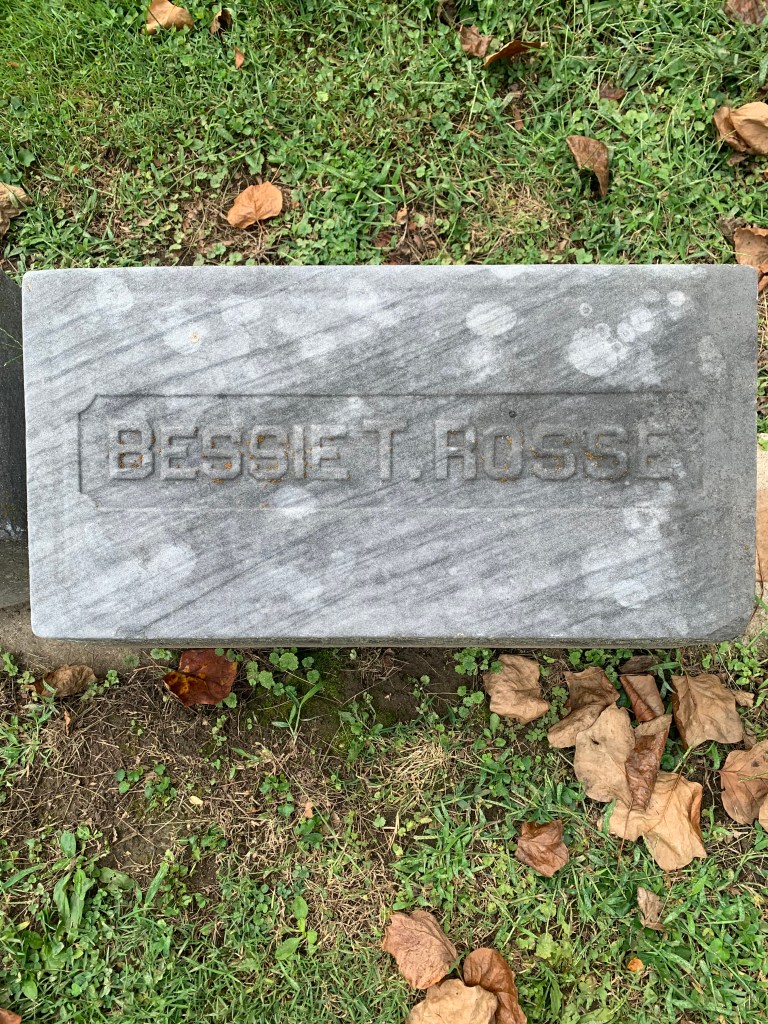
A clear picture of the events of the morning of February 4, 1893, may never surface. Whether Phil Fahrbach walked into Bessie’s room to find Tom Fosner or perhaps another customer of Bessie’s will never be known. Coroner Beck tried his best to pursue the true story. He was certain that the evidence proved a third person could have been involved in the incident. But with the brothel residents unwilling to tell the full story and Bessie Bell never wavering from her account, it seems police investigators grew tired of digging any deeper, especially after chasing so many leads to dead ends and fielding prank letters. In the end, they saw the death of Phil Fahrbach as just another brothel love story gone wrong.
 Circle City Talk